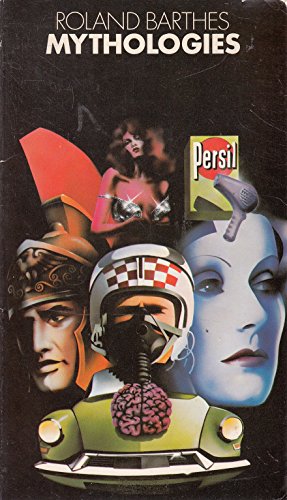
In 1955, Paris-Match magazine published an image that would become one of the most frequently deliberated visual artefacts in modern French intellectual history: a young Black soldier giving a sharp salute. For Roland Barthes, writing two years later in Mythologies (1957), he wasn’t just examining a picture; he was establishing the process of mythmaking within modern media propaganda. The image transformed the historical reality of empire, previously known as fraught, violent, unequal – into a mythical story of French humanitarianism and unity.
But was Barthes’ ideology enough to rely on?
Nearly three decades later, Jean Baudrillard extended Barthes’ semiotic project into a more critical direction. For Baudrillard, late-twentieth-century media no longer purely masked ideology; they overtook the real entirely. Baudrillard’s analysis posits a world of hyperreality (1991), where simulation replaces or buries reality itself.
Taking Barthes’ reading of the Paris-Match cover as the central object, we will look at how Baudrillard’s hyperreality is the radical, pessimistic conclusion of Barthesian myth. Barthes’s goal was to perform sémio-clastie, the “shattering” of ideological signs (Barthes 1957), to reveal the political abuse hiding in the saying “ce qui va de soi”. Therefore, if Barthes’ myth simply masked the truth, Baudrillard’s hyperreality annihilated it, producing simulacra: representations or imitations that no longer conceal truth. In this context, as media transition from the illustrated press to the digital scene, the French intellectual must reconceive critical authority – not as truth-telling, but as a practice of targeted interference.
The Magazine’s Lie: Print, Photography and the Semiotics of Empire

The Paris-Match cover is visually remarkable. Barthes breaks the image into symbolic layers: the signifier is the young Black boy saluting; the signified is French patriotism and the idea of loyal service to France. Thus, the resulting myth is that France is a diverse, unified, and just empire, where even colonial subjects willingly support the nation. He critiques this propaganda, showing how the image uses “le zèle de ce noir à servir ses prétendus oppresseurs” (Barthes 1957) to disguise the realities of colonial subjugation. The composition erased the historical context of a brutal empire, turning a coerced political reality into what Barthes calls le naturalisé: a process where historically produced power becomes common sense.
Crucially, the power of this specific myth is intermedial:
- The medium: The stable, large-format photograph printed in a mass-market magazine broadened the image’s reach and its claim to documentary truth.
- The rhetoric: The photograph’s visual economy – simple, colourful, affectively immediate – demands belief without deep reflection.
Yet, this influential critique was itself ironically flawed. As Lydie Moudileno (2019) notes in her analysis of the semiotic empire, Barthes’ theoretical use and subsequent academic depiction of the image encouraged its reputation of the “mythological celebrity”. Barthes’ initial reading was built upon key inaccuracies that reveal how easily colonial ideology can override even the critic’s intent:
- Misreading the subject: Barthes refers to a “jeune nègre” (1957), but Moudileno (2019) points out that the subject was “unmistakably that of a child or young teenager,” an age detail Barthes failed to acknowledge. This enabled the image to function as the “familiar figure of a colonised soldier,” masking the reality of the child.
- Misreading the referent: Barthes wrote that the soldier’s eyes were “fixés sans doute sur un pli du drapeau tricolore”. Moudileno (2019) confirms that the flag was entirely absent from the cover. The mere suggestion of the flag later disappeared in the retellings by commentators, cementing the image’s colonial myth of loyalty.
These critical findings present image absorption explained by Jacqueline Guittard (2006), where the photograph’s details can be absorbed and distorted by his theoretical text. She notes that Barthes oftens « fragilise[nt] la frontière entre la réalité concrète et celle, réfléchie, des médias », which results in the image’s original complexity to be redundant and replaced by the written critique; a vulnerability where the semiotic empire’s power is sustained not just by the media, but also by its critics.
Print Myth v. Digital Simulacrum
Baudrillard acknowledges Barthes’ brilliance but suggests that the era of myth, where signs still point to reality, has passed. For Barthes, political and historical reality still exists, but is hidden by the print myth, and the goal of critique is demystification in order to recover the hidden political truth (Van Kessel et al. 2025). Baudrillard rejects this “figure of depth,” arguing that the reality (the referent) is no longer stable and has been entirely supplanted by the simulation (Wolny 2017).
This shift is characterised by the intermedial change:
Barthes’ Era (1950s) Baudrillard’s Era (1990s-Present)
| Object: Photograph in the magazine, a stable, analogue object. | Object: The screen (television, digital), an unstable, immaterial flow. |
| Myth: Slow-burn ideology that requires the text to unpack. | Myth: Logic is instantaneous and self-referential. |
| Result: Reality is masked (truth is recoverable) | Result: Reality is displaced (truth is lost) |
(Van Kessel et al. 2025).
The Magazine as Early Simulation
The glossy, full-colour format of Paris-Match already demonstrated simulation’s early power. The magazine’s aesthetic, which prioritises the accessible, vivid photograph, helped substitute reality with its “double iconique” (Guittard 2006). This analogue reproduction was so conscientious – so perfect – that it began to achieve what Baudrillard (Wolny 2017) defines as hyperreality: “the meticulous reduplication of the real, preferably through another, reproductive medium, such as photography.” Even before the digital screen, the magazine’s polished cover obscured the messy, contradictory historical truth. The photograph’s clarity and immediacy created an “excess of the positive” (Baudrillard 2004), where the image was perceived as “truer than true”, effectively eroding the space for Barthes’ slow, rational demystification. This means the magazine photograph was already acting like a simulacrum, not merely hiding the real, but generating a new, flawless version of it.
In Simulacres et Simulation (1981), Baudrillard outlines four phases of the image toward hyperreality.
- Phase 1 (The Sacramental Order): « le reflet d’une réalité profonde »
- Phase 2 (The Order of Malefice/Perversion): « masque et denature une réalité profonde »
- Phase 3 (The Order of Sorcery/Absence): « masque l’absence de réalité profonde »
- Phase 4 (Pure Simulacrum/Hyperreal): « est sans rapport à quelque réalité que ce soit : elle est son propre simulacre pur »
Barthes’ myth sits between phases 2 and 3. But Baudrillard argues that late-capitalist media belongs to phase 4, where the sign no longer represents or hides reality; instead, it simply is: simulation replaces reality with « une substitution au reel des signes du réel » (Baudrillard 1981). Another typical example of this is his analogy of Disneyland: a fantasy space that exists to convince visitors that everything outside it is real – yet the entire distinction is false. Reality becomes modelled on simulation, thus it is « la carte qui précède le territoire »(Baudrillard 1981).
This evolution from Barthes to Baudrillard marks a shift from ideology to hyperreality, from distortion to disappearance.
When War Becomes Image

Baudrillard made his most provocative claim in 1991: « la guerre du Golfe n’a pas eu lieu ». This led to accusations of nihilism: if « 200 000 au moins » (Haacke quoted in Baduel 1993) Iraqis died, how could he say the war did not take place? Yet Baudrillard’s main observation was not that war was not real, but that our understanding of it was built through media systems whose logic could not be escaped.
As Wolny (2017) notes, Baudrillard believed that contemporary war has shifted from physical violence to “an abstract, electronic and informational space”, therefore operating not by conflict, but by online visibility. The Gulf War was immediately perceived as a “perfect Baudrillardian simulacrum, a hyperreal scenario” (Wolny 2017). This hyperreal logic anticipates the algorithmic chaos of the digital age. This media condition, analysed by Pennycook and Rand (2022), links to the spread of misinformation, which is largely driven not by malice but by naïve oversight – a cognitive shortcut done through the lack of interest. This cognitive laziness confirms Baudrillard’s view that the signifiers operate without needing to refer to any factual content or external reality, whether it is obvious or not.
Here, Baudrillard’s hyperreality replaces Barthes’ myth. The problem is no longer distortion but indifference to truth.
The Intellectual’s Counter Strategy: A Game of Seduction
If the truth is gone, what else could the French intellectual do?
Baudrillard argues the intellectual must abandon the traditional role of truth-teller entirely. He suggests that those who continue to seek “underlying reality” are trapped in their own theoretical simulations and describe a world that no longer exists (Singer 1991).
Instead, the suggested direction is through seduction – a strategy that involves a tactical “game” played with signs. Seduction is not about deceiving people but about manipulating the signs themselves (Singer 1991). By engaging in this symbolic “duel” with the media, the intellectual does not try to bring back the truth but aims to destabilise the system by being “plus virtuel que les événements eux-mêmes” (Baudrillard 1991). This means pushing the logic of the hyperreal to its absurd extremes to reveal its hollowness.
This playful approach aligns with the concept of the pharmakon, which is both poison and remedy simultaneously (Cardone & Mollisi 2022). Digital media is indeed the ultimate pharmakon: it provides a powerful platform for critique while simultaneously commodifying and neutralising it. The intellectual’s task is to occupy this ambiguity, using irony and tactical engagement to disrupt circulation rather than attempt to restore a lost political truth.
Conclusion: After the Image, What is the Role for the Intellectual?
The Paris-Match cover demonstrates how a single photographic frame can naturalise an entire political worldview. For Barthes, this image exposes the quiet violence of myth: history rendered innocent, power made ordinary, ideology passed off as truth. Yet as Baudrillard shows, the conditions that enabled Barthesian critique has not sustained. If the Paris-Match soldier once hid the violence of empire beneath patriotic feeling, today such images do not just cover up reality – they help create it (Crawley 2024). For Baudrillard, the soldier’s spotless uniform and respectful salute do not simply gloss over the history of colonial violence; they make it seem as though that history never existed (Barosso 2023), swapping a chaotic story of domination for a clean image of national loyalty. This move, i.e., from myth to simulacrum, signals a larger shift where visual media no longer simply represent the world but actively form what we take to be real. The problem, then, is not that we are deceived by images, but that images have replaced the groundwork by which “reality” could be distinguished from its initial representation. As Pennycook and Rand suggest, the struggle is not between truth and lies but between rival simulations, each experienced as real (2022). Simply exposing distortion, i.e., Barthes’ strategy, cannot restore a referent that has transformed.
If Barthes taught us to read images in depth, Baudrillard forces us to reckon with what happens when reading no longer suffices. The Paris-Match soldier thus stands as both origin and warning: a moment when myth still depended on the real, before simulation consumed its separation. Today’s intellectual must work from within this separation, not against it. Their task should no longer be a political tribunal but instead engage in symbolic play – a game that unsettles the systems through which reality is produced. This is how the intellectual engagement persists after the myth of the real has finally faded.
Further Readings
Baduel, P.-R. (1993). Les médias et la production du réel. L’exemplarité de la seconde guerre du Golfe. Revue du monde musulman et de la Méditerranée, 68(1), pp.265–274. doi: https://doi.org/10.3406/remmm.1993.2572.
Barroso, P. (2023). Baudrillard on the Symbolic Violence of the Image. doi: https://doi.org/10.14649/107729.
Barthes, R. (1957). Barthes Roland Mythologies 1957. [online] Éditions Du Seuil, pp.8–212. Available at: https://monoskop.org/images/9/9b/Barthes_Roland_Mythologies_1957.pdf [Accessed 29 Oct. 2025].
Baudrillard, J. (1981). Simulacres et simulation. [online] Galilee. Available at: https://monoskop.org/images/9/90/BAUDRILLARD_Jean_-_1981_-_Simulacres_et_simulation.pdf [Accessed 25 Oct. 2025].
Baudrillard, J. (1991). La Guerre du Golfe n’a pas eu lieu. Galilée ed. Mayenne: Galilee.
Bidermanas, I. (1995). Cover of Paris-Match Magazine. [Magazine] Available at: https://www.gettyimages.co.uk/detail/news-photo/cover-of-paris-match-magazine-n-326-of-june-25-to-july-02-news-photo/162122189#:~:text=Paris%20Match%20Cover%20N%C2%B0,RESTRICTED%20ASSET [Accessed 30 Oct. 2025].
Cardone, L. and Angelo Mollisi, M. (2022). Images beyond History. Jean Baudrillard’s Apocaliptic Pharmacology. [online] Available at: https://mimesisjournals.com/ojs/index.php/mechane/article/download/1897/1487 [Accessed 31 Oct. 2025].
Crawley, J. (2024). Subjectivity in Circulation: Jean Baudrillard and the Image as Objective Reality. [online] Available at: https://stars.library.ucf.edu/hut2024/22/?utm_source=stars.library.ucf.edu%2Fhut2024%2F22&utm_medium=PDF&utm_campaign=PDFCoverPages [Accessed 2 Nov. 2025].
European Graduate School Video Lectures (2015). Jean Baudrillard. Violence of the Image. 2004. [online] YouTube. Available at: https://www.youtube.com/watch?v=vB3baRqDbyY [Accessed 27 Oct. 2025].
Guittard, J. (2006). Impressions photographiques : les Mythologies de Roland Barthes. Littérature, 143(3), p.114. doi: https://doi.org/10.3917/litt.143.0114.
Kessel, C. van, Manriquez, J.D. and Kline, K. (2025). Baudrillard, hyperreality, and the ‘problematic’ of (mis/dis) information in social media. Theory & Research in Social Education, [online] 53(2), pp.1–23. doi: https://doi.org/10.1080/00933104.2024.2439302.
Moudileno, L. (2019). Barthes’s Black Soldier: The Making of a Mythological Celebrity. The Yearbook of Comparative Literature, 62(1), pp.57–72. doi: https://doi.org/10.3138/ycl.62.017.
Pennycook, G. and Rand, D.G. (2022). Nudging Social Media toward Accuracy. The ANNALS of the American Academy of Political and Social Science, 700(1), pp.152–164. doi: https://doi.org/10.1177/00027162221092342.
Singer, B. (1991). BAUDRILLARD’S SEDUCTION. [online] Available at: https://journals.uvic.ca/index.php/ctheory/article/view/14275/5051 [Accessed 27 Oct. 2025].
The Guardian (1991). The Reality Gulf. [News Article] Available at: https://theguardian.newspapers.com/image/260063916/ [Accessed 3 Nov. 2025].
Wolny, R.W. (2017). Hyperreality and Simulacrum: Jean Baudrillard and European Postmodernism. European Journal of Interdisciplinary Studies, [online] 8(1), p.76. doi: https://doi.org/10.26417/ejis.v8i1.p76-80.
 Intellectuals and the Media in France