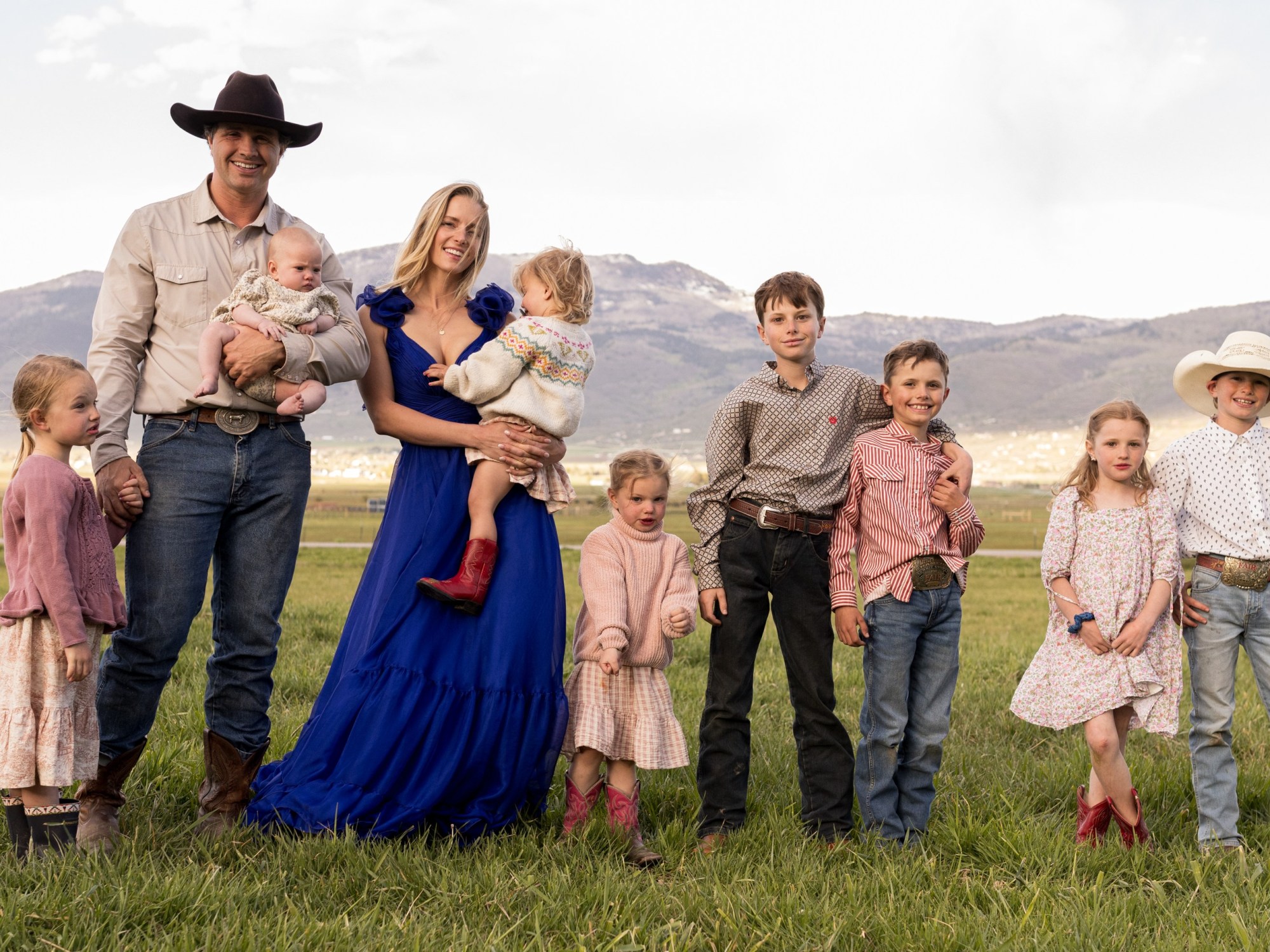
In contemporary media, the golden age and glorification of the empowered Girl Boss has given way to the rise of the tradwife phenomenon – in which women embrace traditional domestic roles. Think Nara Smith and her elaborate from-scratch TikTok recipes; social media’s obsession with the young stay at home mothers featured on TV’s The Secret Lives of Mormon Wives; as well as calls to free Hannah Neeleman (or ballerinafarm as she is known across her social media channels) from her perceived oppressive life.
This phenomenon is not merely a passing trend; it reflects deeper societal currents that shape our understanding of femininity and how women negotiate their identities within these frameworks. French feminist philosopher Manon Garcia draws on Simone de Beauvoir’s theories to explore the misconception that submission is inherently feminine in her book We Are Not Born Submissive: How Patriarchy Shapes Women’s Lives[i]. Garcia argues that “contemporary popular culture and media representations often suggest that there is something intrinsically feminine in submission”[ii], thereby reinforcing and perpetuating patriarchal norms.
Through Simone De Beauvoir’s Le Deuxième Sexe[iii], we can better understand the implications of and the fascination surrounding these representations of inherent submission associated with femininity, popularised by social media algorithms. Beauvoir‘s concepts of immanence and transcendence in particular provide a lens through which we can examine the role of women in a patriarchal society. Immanence refers to the limited, passive roles traditionally ascribed to women, often depicting them as confined to domestic spheres and inward-focused existence.
In stark contrast, transcendence encompasses the active, outward engagement with the world that is generally reserved for men. She argues that “chaque fois que la transcendance retombe en immanence il y a dégradation de l’existence en soi”[iv]. Here, Beauvoir conveys a belief that when women, who have the potential for transcendence, are confined to immanence, their existence is diminished. In other words, by limiting women to passive domestic roles, society is not allowing them to fully realise their potential as active and engaged participants in the world. This degradation of existence is particularly relevant in the context of the tradwife phenomenon.
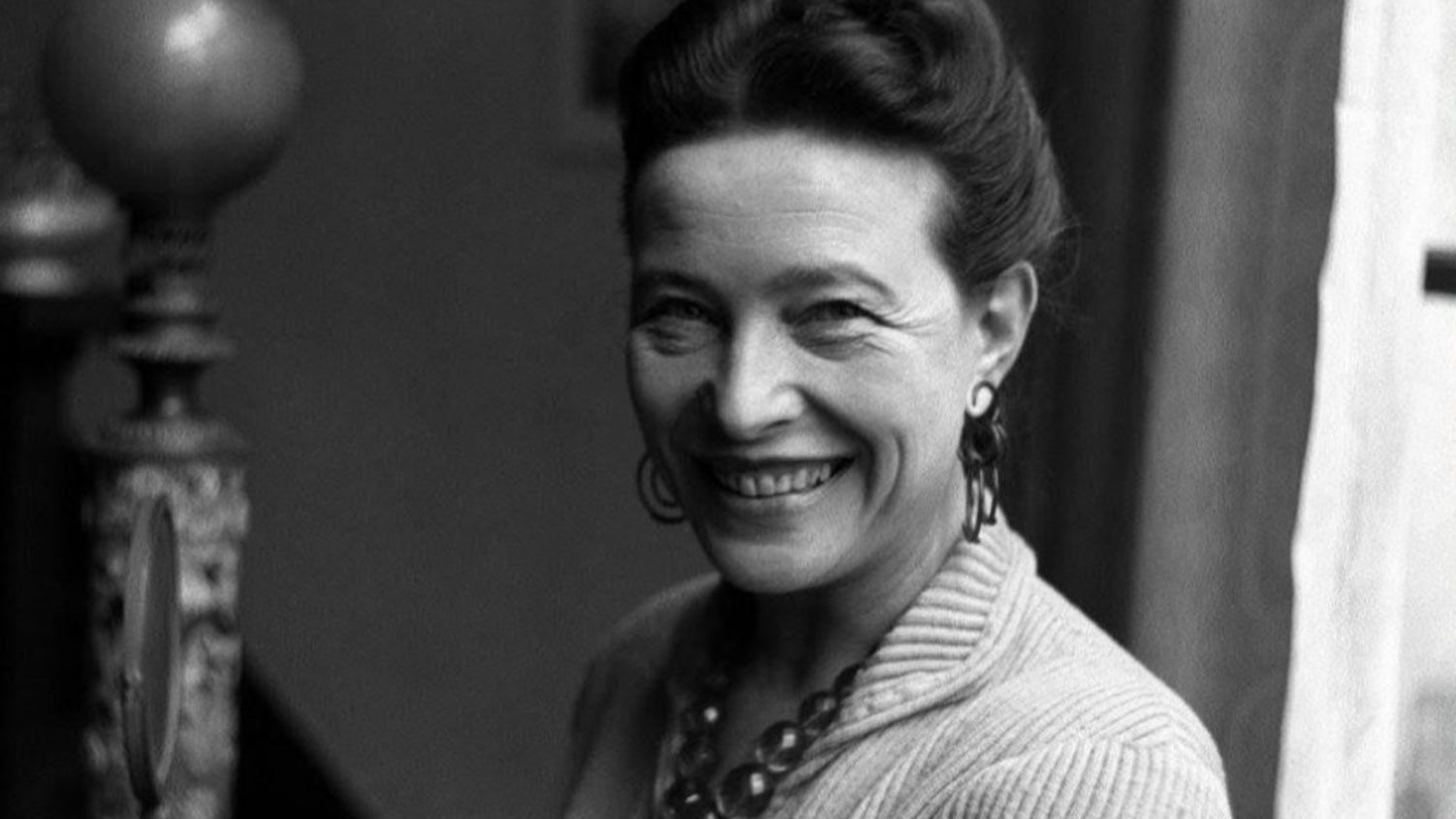
In this context, the glorification of tradwives can be viewed as an endorsement of immanence, perpetuating the idea that true femininity lies in submission and domesticity. This endorsement not only reflects historical patterns but also speaks to current cultural trends, in which traditional depictions of femininity continue to resonate powerfully, as exemplified by the wave of tradwives seen in contemporary media.
Neeleman’s recent interview with The Times[v] serves as the artefact through which we will examine the continued relevance and applicability of Beauvoir’s theories in the contemporary age. Through an examination of Neeleman’s life and public persona, we can explore the nuances of choice, empowerment, and the societal expectations placed upon women in both today and the era of Beauvoir.
In her interview with The Times journalist Megan Agnew, Neeleman states that she does not fully identify with the label of tradwife, despite being dubbed the ‘Queen of the Trad Wives’[vi].A nomination which demonstrates the extent to which social media platforms glamourise traditional, domesticated life. Neeleman’s ambivalence towards this nickname highlights a critical tension between her self-identity and societal expectations. While she may embrace certain aspects of traditional femininity, her hesitation to fully align with the label suggests an awareness of the limitations it imposes. Beauvoir argued that even when women appear to choose their roles, these choices are influenced by societal norms, or “situation”[vii], which act as a constraint to freedom.
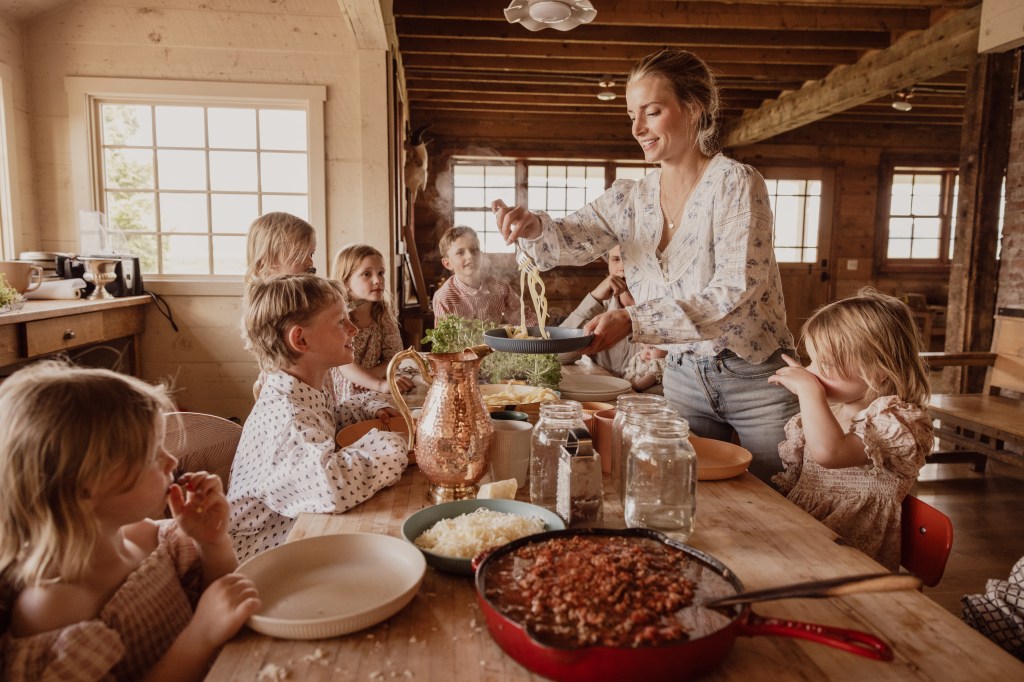
Upon first glance, Neeleman may appear completely confined to immanence by situation: one of the first quotes from her in the interview is that she does not “know what feminism means anymore”[viii]. A deliberate strategy I believe to have been employed by the journalist to paint Neeleman as a damsel in distress archetype, trapped under her husband’s thumb in a completely unfulfilling life. However in reality, Neeleman embodies a Beauvoirian dichotomy – straddling immanence and transcendence, challenging the portrayal of her as a victim of patriarchal oppression. While her statement regarding feminism may initially suggest a retreat from feminist ideals, exaggerated by the journalist, it may also reflect a broader societal ambivalence toward the politicisation of women’s roles. Far from being confined to a passive existence, Neeleman actively navigates multiple identities as a mother and entrepreneur – something which has been made possible by her social media platforms acting as a digital stage.
At the time of writing, Neeleman has amassed almost 10 million followers and 159.5 million likes on TikTok alone. Through social media, Neeleman has been able to transform her domestic life into a profitable business, demonstrating that her engagement with traditional gender roles does not preclude her from transcending to financial independence and public influence.
The framing of Neeleman by the journalist in this interview serves to further the narrative of submission. Agnew presents the Neelemans as a traditional patriarchal couple, making repeated reference to a “husband who thinks he knows better”[ix] whereas Neeleman herself is adamant in describing their partnership as “co-CEOs”[x]. This distinction emphasizes the tension between societal narratives imposed upon the family by the media and personal agency.
While Agnew’s composition of this article suggests that Neeleman’s lifestyle is perpetuating outdated gender roles, her position as a businesswoman complicates this narrative. Beauvoir would argue that financial independence is crucial for women to achieve transcendence, as she argues that the comprehension of “un destin économique”[xi] is an essential element to female transcendence. Neeleman’s financial success in building a brand around her domestic life illustrates that women can inhabit traditional roles without sacrificing agency.
Nevertheless, the aestheticisation of immanence in Neeleman’s online presence reveals how social media can both reinforce and subvert traditional gender roles. Her carefully curated images and content highlight domestic bliss – cooking, farming, and motherhood – yet they simultaneously serve as a platform for entrepreneurial success. In this way, Neeleman is not simply adhering to the role of a tradwife; she is transforming that role into a consumable brand that appeals to millions.
In What’s Left of Philosophy[xii], Manon Garcia questions whether the involvement of husbands in this content would classify them as employees of their tradwife – a complete subversion of the narrative in which Neeleman is oppressed. Garcia brings into conversation the philosopher and economist Amartya Sen, who discusses the ways in which “individuals adapt their preferences and the evaluation of their wellbeing to the situation in which they find themselves.”[xiii] This concept of adaptive preferences can be applied to Neeleman’s case, where her embrace of traditional domestic roles can be seen as a strategic adaptation to her circumstances, allowing her to thrive within a framework that might otherwise be restrictive.
Furthermore, in Melissa Florer-Bixler’s discussion on tradwives, she points out that the entire business model of social media influencers like Neeleman is a “grift”[xiv]. Social media creation is a job that produces revenue, and these women are essentially businesswomen who are removing themselves from the sphere of domestic labour in order to produce the propaganda of domestic labour. We may also wonder how much husbands are involved in filming these domestic scenes, effectively becoming the employees of their tradwives. This dynamic complicates the traditional narrative of submission and highlights the ways in which women like Neeleman navigate and exploit the very frameworks that seek to constrain them.
Ultimately, Neeleman’s story reveals the ongoing struggle for women to navigate and redefine their identities within a framework that valorises submission. Her ability to turn domestic life into a business empire exemplifies how women can reclaim and transform traditional roles. By engaging with Beauvoir’s theories, we gain a deeper understanding of the dynamics at play and the potential for women to transcend societal limitations, highlighting the need for a critical examination of how gender roles are perpetuated and subverted in modern media. The juxtaposition of Neeleman’s public persona against societal expectations reveals the potential for women to subvert traditional narratives and assert their identities in multifaceted ways. Thus, it is imperative to critically examine how gender roles are constructed and challenged in modern media, drawing comparisons with key critical framework such as Le Deuxième Sexe.
Appendix:
Fig 2: https://www.workingal.com/articles/inspirational-women-simon-de-beauvoir
Recommendations for Further Reading:
Agnew, M. (2024) Meet the queen of the ‘trad wives’ (and her eight children), The Times. Available at: https://archive.is/2024.07.21-111042/https:/www.thetimes.com/magazines/the-sunday-times-magazine/article/meet-the-queen-of-the-trad-wives-and-her-eight-children-plfr50cgk?t=ie
De Beauvoir, S. (1986) Le Deuxième Sexe. Paris, France: Gallimard.
Florer-Bixler, M. (2024) Trad wives, submission, and staying unhappy, Trad Wives, Submission, and Staying Unhappy. Available at: https://melissaflorerbixler.substack.com/p/trad-wives-submission-and-staying
Garcia, M., 2021. We are not born submissive: How patriarchy shapes women’s lives. Princeton University Press.
Garcia, M. 2024. What’s Left of Philosophy. [Podcast]. 7 March 2024. Available at: https://open.spotify.com/episode/1mdJoXVvTXn5tN6WgjLIwB?si=_18eDka2RAK445lsLya_Aw [Accessed 20 October 2024]
Moi, T., 2008. Simone de Beauvoir: The making of an intellectual woman. Oxford University Press, USA. Available here
[i] Garcia, M., 2021. We are not born submissive: How patriarchy shapes women’s lives. Princeton University Press.
[ii] Ibid. p. 22
[iii] De Beauvoir, S. (1986) Le Deuxième Sexe. Paris, France: Gallimard.
[iv] Ibid. p. 31
[v] Agnew, M. (2024) Meet the queen of the ‘trad wives’ (and her eight children), The Times. Available at: https://archive.is/2024.07.21-111042/https:/www.thetimes.com/magazines/the-sunday-times-magazine/article/meet-the-queen-of-the-trad-wives-and-her-eight-children-plfr50cgk?t=ie (Accessed: 16 October 2024).
[vi] Ibid.
[vii] De Beauvoir
[viii] Agnew
[ix] Ibid.
[x] Ibid.
[xi] De Beauvoir, p. 32
[xii] Garcia, M. 2024 What’s Left of Philosophy. [Podcast]. 07 March 2024
[xiii] Ibid.
[xiv] Florer-Bixler, M. (2024) Trad wives, submission, and staying unhappy, Trad Wives, Submission, and Staying Unhappy. Available at: https://melissaflorerbixler.substack.com/p/trad-wives-submission-and-staying (Accessed: 23 October 2024).
 Intellectuals and the Media in France